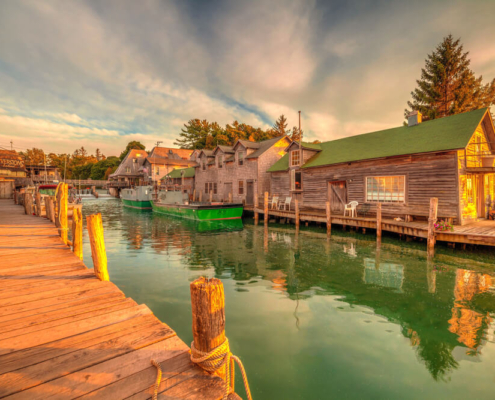
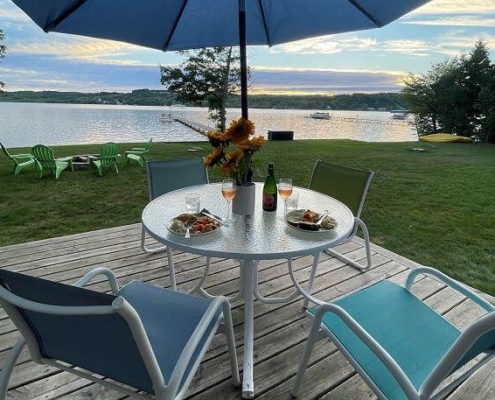
Harris Properties Vacation Rentals

Northern Michigan Leelanau Traverse City Farmers Market, Roadside Stands Grand Traverse Shoreline & more. Support your local farmers!

When you are staying with Visit Up North Vacation Rentals plan on visiting the many great roadside stands and farm markets boasting fresh local food for your table. Support your (our) local farmers!

There is nothing more tasty than fresh produce straight from where it is grown. Northern Michigan has a bounty of farms that feature fruits and vegetables fresh picked and waiting for apple-stand.jpgyou. Make a trip to local farm markets available every week through out the area. Farmer’s markets not only offer the fresh pick of the day but pies and baked goods, local honey and more.

Every village features a roadside stand that features all kinds of luscious foods. Fresh sweet apricots and peaches, asparagus straight out of the field waiting for your plate and melted butter,fresh sliced cukes,tomatoes w/ fresh basil,sweet squash baked on the grill–oh my. You can leave Michigan healthy and happy after you visit this great place. Follow this link for a variety of farms http://localdifference.org/farmresults.asp through the area.

Locations of farmer’s markets late spring – fall.

Traverse City – Sat. & Wed. – 8 am-12 pm

Suttons Bay – Saturday 9 am-1 pm

Leland – Thursday 8 am – 12 pm

Glen Arbor – Tuesday 9 am-1 pm

Empire – Saturday 9am- 1pm


Michigan State Parks/National Park Passes Leland, Empire, Northport, Lake Michigan when you Visit Up North

Visiting Northern Michigan is an exciting adventure with so many places to see. Among the many places to enjoy are our national parks and beaches. To keep these beautiful parks clean and protected guests, will now need a visitors’ park pass. You can purchase a state park pass now called “America the Beautiful National Parks and Recreational Land Annual Pass” that is good all over the United States including Northern Michigan.Follow this link for your yearly pass.

http://usparks.about.com/gi/dynamic/offsite.htm?zi=1/XJ&sdn=usparks&cdn=travel&tm=177&gps=328_962_728_413&f=10&su=p531.31.152.ip_p531.29.420.ip_p284.8.150.ip_&tt=2&bt=1&bts=0&zu=http%3A//www.recreation.gov/


Passes can be purchased at local state parks as well as any DNR location. Annual passes for those residing in the state of Michigan are $24.00 for non- resident $29.00. Daily passes $6.00 resident $8.00 non-resident. For more details about purchasing Michigan state passes click on link below.

  http://www.michigan.gov/dnr/0,1607,7-153-10365-82938–,00.html

Whats up at Visit Up North

    We have some hot new properties in some beautiful places. They won’t last long. Call today and start planning your vacation today! 800-901-8922.

sunset

More water safety tips from American Red Cross enjoy your Leelanau/Traverse City vacation

Home > Services > Health and Safety Services > Swimming and Lifeguarding >Water Safety Tips

These General Water Safety Tips will help you stay safe in, on, and around the water! General Water Safety Tips for Beach Safety Boating Home Pools Keeping Children Safe In, On, and Around the Water Lakes and Rivers Ocean Safety Personal Watercraft (Jet Skis) Sailboarding and Windsurfing Skin and SCUBA Diving Snorkeling Surfing Tubing and Rafting Waterparks Water Skiing General Water Safety Tips Learn to swim. The best thing anyone can do to stay safe in and around the water is to learn to swim. Always swim with a buddy; never swim alone. The American Red Cross has swimming courses for people of any age and swimming ability. To enroll in a swim course, contact your local Red Cross chapter. Swim in areas supervised by a lifeguard. Read and obey all rules and posted signs. Children or inexperienced swimmers should take precautions, such as wearing a U.S. Coast Guard-approved personal floatation device (PFD) when around the water. Watch out for the dangerous “too’s” – too tired, too cold, too far from safety, too much sun, too much strenuous activity. Set water safety rules for the whole family based on swimming abilities (for example, inexperienced swimmers should stay in water less than chest deep). Be knowledgeable of the water environment you are in and its potential hazards, such as deep and shallow areas, currents, depth charges, obstructions and where the entry and exit points are located. The more informed you are, the more aware you will be of hazards and safe practices. Pay attention to local weather conditions and forecasts. Stop swimming at the first indication of bad weather. Use a feet-first entry when entering the water. Enter headfirst only when the area is clearly marked for diving and has no obstructions. Do not mix alcohol with swimming, diving or boating. Alcohol impairs your judgment, balance, and coordination, affects your swimming and diving skills, and reduces your body’s ability to stay warm. Know how to prevent, recognize, and respond to emergencies. Back to the top Beach Safety Protect your skin: Sunlight contains two kinds of UV rays — UVA increases the risk of skin cancer, skin aging, and other skin diseases. UVB causes sunburn and can lead to skin cancer. Limit the amount of direct sunlight you receive between 10:00 a.m. and 4:00 p.m. and wear a sunscreen with a sun protection factor of at least 15. Drink plenty of water regularly and often even if you do not feel thirsty. Your body needs water to keep cool. Avoid drinks with alcohol or caffeine in them. They can make you feel good briefly but make the heat’s effects on your body worse. This is especially true with beer, which dehydrates the body. Watch for signs of heat stroke: Heat stroke is life-threatening. The person’s temperature control system, which produces sweating to cool the body, stops working. The body temperature can rise so high that brain damage and death may result if the body is not cooled quickly. Signals of heat stroke include – Hot, red, and usually dry skin, but in some cases such as during athletic activity while wearing a helmet, the skin may be moist Changes in consciousness Rapid, weak pulse, and Rapid, shallow breathing. Call 9-1-1 or your local EMS number. Move the person to a cooler place. Quickly cool the body by wrapping wet sheets around the body and fan it. If you have ice packs or cold packs, place them on each of the victim’s wrists and ankles, in the armpits and on the neck to cool the large blood vessels. Watch for signals of breathing problems and make sure the airway is clear. Keep the person lying down. Wear eye protection Sunglasses are like sunscreen for your eyes and protect against damage that can occur from UV rays. Be sure to wear sunglasses with labels that indicate that they absorb at least 90 percent of UV sunlight. Wear foot protection. Many times, people’s feet can get burned from the sand or cut from glass in the sand. Back to the top Boating Safety Learn to swim. The best thing anyone can do to stay safe in and around the water is to learn to swim. This includes anyone participating in any boating activity. The American Red Cross has swimming courses for people of any age and swimming ability. To enroll in a swim course, contact your local Red Cross chapter. Alcohol and boating don’t mix. Alcohol impairs your judgment, balance, and coordination — over 50 percent of drownings result from boating incidents involving alcohol. For the same reasons it is dangerous to operate an automobile while under the influence of alcohol, people should not operate a boat while drinking alcohol. Look for the label: Use Coast Guard-approved life jackets for yourself and your passengers when boating and fishing. Develop a float plan. Anytime you go out in a boat, give a responsible person details about where you will be and how long you will be gone. This is important because if the boat is delayed because of an emergency, becomes lost, or encounters other problems, you want help to be able to reach you. Find a boating course in your area (U.S. Power Squadron, the U.S. Coast Guard Auxiliary, US Sailing, etc) — these courses teach about navigation rules, emergency procedures and the effects of wind, water conditions, and weather. Watch the weather: Know local weather conditions and prepare for electrical storms. Watch local news programs. Stop boating as soon as you see or hear a storm. Back to the top Home Pools Learn to swim. The best thing anyone can do to stay safe in and around the water is to learn to swim–this includes adults and children. The American Red Cross has swimming courses for people of any age and swimming ability. To enroll in a course to learn or improve your ability to swim, contact your local Red Cross chapter. Never leave a child unobserved around water. Your eyes must be on the child at all times. Adult supervision is recommended. Install a phone by the pool or keep a cordless phone nearby so that you can call 9-1-1 in an emergency. Learn Red Cross CPR and insist that babysitters, grandparents, and others who care for your child know CPR. Post CPR instructions and 9-1-1 or your local emergency number in the pool area. Enclose the pool completely with a self-locking, self-closing fence with vertical bars. Openings in the fence should be no more than four inches wide. The house should not be included as a part of the barrier. The gate should be constructed so that it is self-latching and self-closing. Never leave furniture near the fence that would enable a child to climb over the fence. Always keep basic lifesaving equipment by the pool and know how to use it. Pole, rope, and personal flotation devices (PFDs) are recommended. Keep toys away from the pool when it is not in use. Toys can attract young children into the pool. Pool covers should always be completely removed prior to pool use. If a child is missing, check the pool first. Go to the edge of the pool and scan the entire pool, bottom, and surface, as well as the surrounding pool area Back to the top Keeping Children Safe In, On, and Around the Water Maintain constant supervision. Watch children around any water environment (pool, stream, lake, tub, toilet, bucket of water), no matter what skills your child has acquired and no matter how shallow the water. For younger children, practice “Reach Supervision” by staying within an arm’s length reach. Don’t rely on substitutes. The use of flotation devices and inflatable toys cannot replace parental supervision. Such devices could suddenly shift position, lose air, or slip out from underneath, leaving the child in a dangerous situation. Enroll children in a water safety course or Learn-to-Swim classes. Your decision to provide your child with an early aquatic experience is a gift that will have infinite rewards. These courses encourage safe practices. You can also purchase a Water Safety Handbook at the Red Cross Store. Parents should take a CPR course. Knowing these skills can be important around the water and you will expand your capabilities in providing care for your child. You can contact your local Red Cross to enroll in a CPR course. Back to the top Lakes and Rivers Learn to swim. The best thing anyone can do to stay safe in and around the water is to learn to swim–this includes adults and children. The American Red Cross has swimming courses for people of any age and swimming ability. To enroll in swim course, contact your local Red Cross chapter. Select a supervised area. A trained lifeguard who can help in an emergency is the best safety factor. Even good swimmers can have an unexpected medical emergency in the water. Never swim alone. Select an area that is clean and well maintained. A clean bathhouse, clean restrooms, and a litter-free environment show the management’s concern for your health and safety. Select an area that has good water quality and safe natural conditions. Murky water, hidden underwater objects, unexpected drop-offs, and aquatic plant life are hazards. Water pollution can cause health problems for swimmers. Strong tides, big waves, and currents can turn an event that began as fun into a tragedy. Make sure the water is deep enough before entering headfirst. Too many swimmers are seriously injured every year by entering headfirst into water that is too shallow. A feet first entry is much safer than diving. Be sure rafts and docks are in good condition. A well-run open-water facility maintains its rafts and docks in good condition, with no loose boards or exposed nails. Never swim under a raft or dock. Always look before jumping off a dock or raft to be sure no one is in the way. Avoid drainage ditches and arroyos. Drainage ditches and arroyos for water run-off are not good places for swimming or playing in the water. After heavy rains, they can quickly change into raging rivers that can easily take a human life. Even the strongest swimmers are no match for the power of the water. Fast water and debris in the current make ditches and arroyos very dangerous. Back to the top Ocean Safety Learn to swim. The best thing anyone can do to stay safe in and around the water is to learn to swim–this includes adults and children. The American Red Cross has swimming courses for people of any age and swimming ability. Contact your local Red Cross chapter for information on courses. Stay within the designated swimming area, ideally within the visibility of a lifeguard. Never swim alone. Check the surf conditions before you enter the water. Check to see if a warning flag is up or check with a lifeguard for water conditions, beach conditions, or any potential hazards. Stay away from piers, pilings, and diving platforms when in the water. Keep a lookout for aquatic life. Water plants and animals may be dangerous. Avoid patches of plants. Leave animals alone. Make sure you always have enough energy to swim back to shore. Don’t try to swim against a current if caught in one. Swim gradually out of the current, by swimming across it. Back to the top Personal Watercraft (Jet Skis) Learn to swim. The best thing anyone can do to stay safe in and around the water is to learn to swim. This includes anyone participating in any water sport or boating activity. The American Red Cross has swimming courses for people of any age and swimming ability. To enroll in a swim course, contact your local Red Cross chapter. Know your local laws and regulations. Some states have special laws governing the use of personal water craft (PWC) which address operations, registration and licensing requirements, education, required safety equipment and minimum ages. Operate your PWC with courtesy and common sense. Follow the traffic pattern of the waterway. Obey no-wake and speed zones. Use extreme caution around swimmers and surfers. Run your PWC at a slow speed until the craft is away from shore, swimming areas, and docks. Avoid passing close to other boats and jumping wakes. This behavior is dangerous and often illegal. Coast Guard-approved life jackets should be worn by the operator of the PWC as well as any riders. Ride with a buddy. PWCs should always travel in groups of two or three. You never know when an emergency might occur. Alcohol and operating a PWC doesn’t mix. Alcohol impairs your judgment, balance, and coordination. For the same reasons it is dangerous to operate an automobile, people should not operate a boat or PWC while drinking alcohol. Back to the top Sailboarding and Windsurfing Always wear a Coast Guard-approved life jacket. Wear a wet suit in cold water to prevent hypothermia. You need good physical strength and swimming ability. The American Red Cross has swimming courses for people of any age and swimming ability. To enroll in a swim course, contact your local Red Cross chapter. Take windsurfing lessons from a qualified instructor. Know local weather conditions. Make sure the water and weather conditions are safe. Because water conducts electricity, it is wise to stop swimming, boating or any activities on the water as soon as you see or hear a storm. Also, heavy rains can make certain areas dangerous.

Hotel vs Vacation home. Why choose a vacation rental. Visit Up North

LaDolce Vita

The process for renting a vacation home differs from booking a hotel room. One of the many benefits is working with a property management company that has the expertise to make staying at a cottage or home headache free. Their personal interest in your stay and knowledge of the property are far beyond that of a hotel reservation center! This helps you make the best choice for you and your family. Let Visit Up North Vacation Rentals friendly staff start helping you today… it’s absolutely worth it!

baybluehs
Spend less, travel more
Priced between 50 and 80 percent less per square foot than the average hotel room in popular destinations, vacation rentals offer real value.


Room to relax

Say goodbye to the small hotel room. Our average vacation rental is 1800 sq. ft

Privacy

No hotel staff to disturb you, and plenty of private space for spending family-time together.


The kitchen is always open

Dine in with the kids or dine out on the town. Free yourself from vending machines and expensive room service. Stock up on local fresh farm goods and fresh local products.

Bring the dog

Many vacation rentals are pet friendly and offer dog beds, dog runs, and more so your best friend will feel right at home. No more putting your furry friend in a kennel.

Water Safety Tips Northern Michigan Be safe when you Visit Up North

These general water safety tips will help you stay safe in and around the water.

Learn to swim.The best thing anyone can do to stay safe is to learn to swim. Always swim with a buddy;never swim alone. The American Red Cross has swimming courses for people of all ages. Contact a local Red Cross chapter.

Swim in areas supervised by a lifegaurd on public beach areas.

Children and inexperienced swimmers should take precautions, such as wearing a U.S.Coastguard approved personal floatation device.

Watch out for dangerous “too’s”. Too tired, too cold, too much sun from strenuous activity, too far from safety.

Set water rules for the entire family.

Be knowledgeable of the water environment you are in and the potential hazards, such as deep & shallow areas, current and depth changes.

Pay attention to local weather conditions. Stop swimming at the first indication of bad weather.

Do not use alcohol with swimming, diving or boating. Alcohol impairs judgement, balance and coordination. It also reduces your body’s ability to stay warm.

Watch for signs of heat stroke. Heat stroke is life threatening. The body’s temperature control system which produces sweating stops working.

Wear foot protection.

Never leave a child unobserved around water.Adult supervision is recommended at all times.

Keep your cell phone or cordless nearby in case you need to call 911.

Considering water safety rules can help ensure a safe and happy vacation!

Amazing location on sugar sand beach Omena Michigan near Northport & Suttons Bay

bishopsotherbeachview

This is a dream come true location. Sugar sand beach, privacy and beautiful accommodations all can be yours. Call us

    at 800-901-8922 and reserve today.
    Don’t miss the chance to stay at this artistic, contemporary home that overlooks a breathtaking sugar sand beach right out the front door. This very private home is shaded by beautiful towering trees and nicely landscaped in the charming town of Omena (north of Traverse City). Features 2 bdrms plus loft/1-1/2 baths. Sleeps 6 w/1 King, 1 Full and 1 Futon. Jacuzzi bathtub, large deck, FP, woodstove, W/D, WIFI. Open concept kitchen/living room, hardwood floors.
    Visit the Tamarak Art Gallery and Knot Just a Bar for wine and excellent food while you’re in Omena.bishopbeachfront
    Just 5 minutes to Northport which features weekly fun at the marina, festivals, galleries and more. 10 minutes to Suttons Bay. Near several wineries too. This area offers gently winding roads to walk or ride your bike. Deer roam in the deep woods and graze at the side of the road. At road side stands, you can buy fresh cherries as well as other tasty local treats. Peaceful, restful, quiet, in an area where you can hear the birds and smell the fresh air. What more could you ask for?! TV (no cable)/VCR/DVD,No A/C, WIFI, Linens included, No Smoking, Sun-Sun.
    Feb 09 guest comment: Unbelievable getaway spot! 5 stars

Video of Leelanau and the Sleeping Bear Dunes in 1949!

Take a step back in time and enjoy this short tourism documentary on Northern Michigan from somewhere around 1950. It features the Sleeping Bear Dunes, Glen Lake, Interlochen, Traverse City and other areas that we have cottages and homes. The really neat thing is that a lot of our area looks just like this today! Come and experience an almost untouched gem that is Northern Michigan.

Kayak/Canoe Rentals Lake Leelanau, Interlochen, Glen Arbor, Leland, Traverse City

Spend a lazy day paddling down the many lakes and rivers that dot this area.The Crystal River http://www.theconservancy.com/crystalriver.htmlin Glen Arbor offers an easy trip for the novice paddler while the lower Platte Lake is a great spot for the new to canoeing to the experienced. The 182,000 acre Boardman River flows through Traverse City http://www.boardmanriver.org/watershed.php 

makes for a terrific day trip.To make your travel plans easy these friendly rental shops are waiting for you to stop by. Don’t forget your suncreen.

Body Balance (Suttons Bay)231-271-2210

Crystal Riverr Outfitters (Glen Arbor)www.crystalriveroutfitters.com

Riverside Rentals (Platte River)-231-325-5622

Honor Trading Post (Platte River)-231-325-2202

Ranch Rudoplh (Traverse City)-231-947-9529

Alvinas (Interlochen)-231-276-9514

Sleeping Bear Surf & Kayak (Empire)-231-326-9283


Saving Birds thru Habitat Omena Michigan Near Grand Traverse Bay

 This habitat Discovery Center in Omena  www.savingbirds.org/ is located on three acres and is adjacent to a forty-four acre private sanctuary.This sanctuary was established in 1993 to aid slumping songbird tc-greatwhite-7.jpgpopulations.Since that time,it has hosted more than 60 nesting species. An additional hundred species have used the property for foraging during migration. The Center is open mid-April thru mid-October,every Wednesday-Saturday from 9-4 and Sunday 1-4.The trail is open 7 am to 8 pm daily during the same months.Bring your camera and binoculars and enjoy your flight.      5020 N.Putnam Road Omena.231-271-3738

Call Toll Free: 800.901.8922
600 West Front Street
Traverse City, MI 49684
Toll Free: 800.901.8922
Local: 231.922.8922
email: hpi@VisitUpNorth.com
© 2008 Visit Up North Vacation Rentals (formerly Harris Properties). All Rights Reserved.
webdesign by leelanau.com